
BLuEngineering for municipalities, public authorities and church organisations
Public properties, tight budgets, high expectations. We help you reconcile them.
Climate targets, rising energy costs and growing demands for transparency and sustainability – public and church organisations face complex decisions that call for technical expertise. We provide the basis so you can plan, decide and report with confidence.
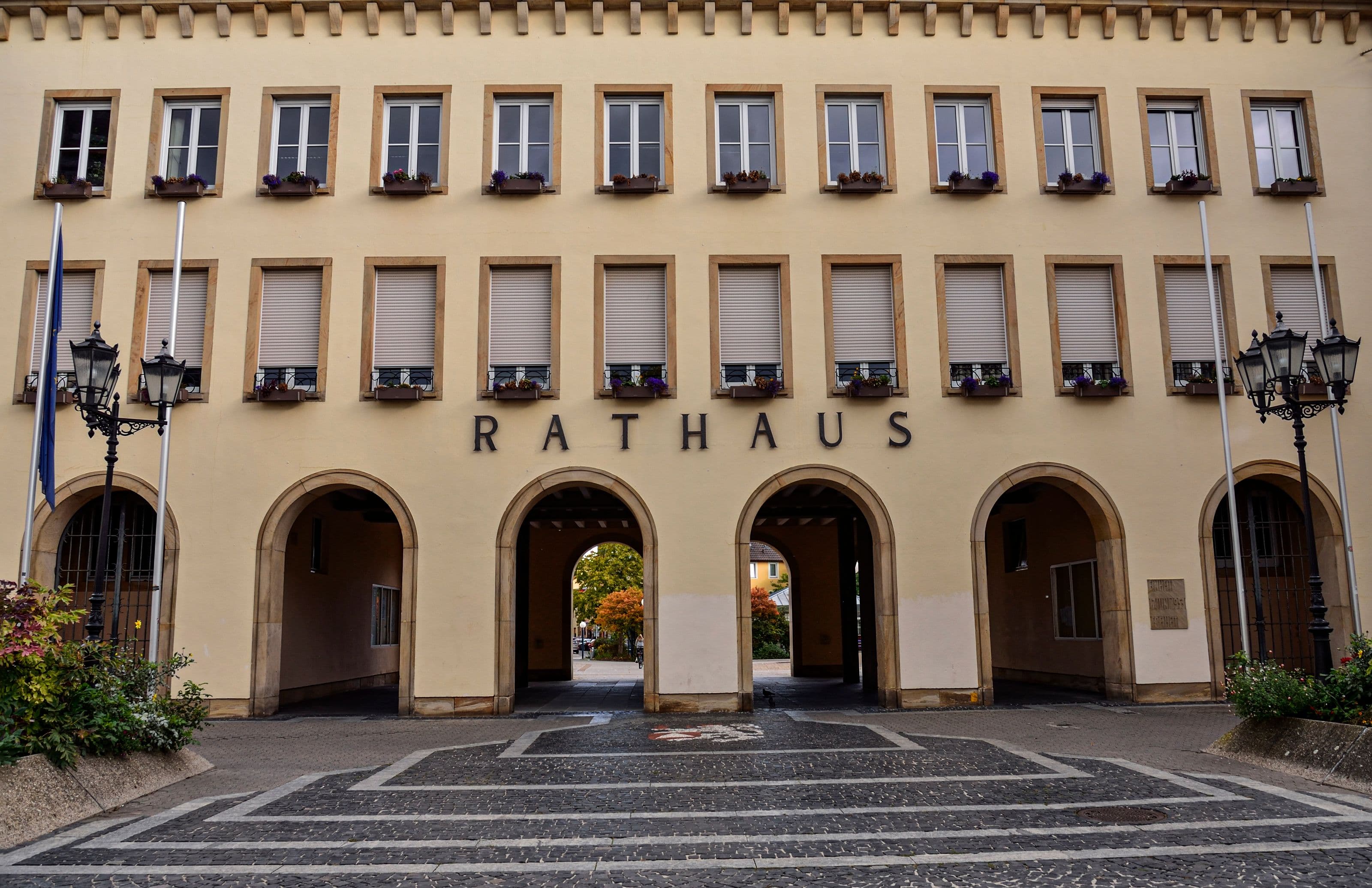
The starting point
Public properties: pressure to act from all sides, resources on one side only.
Municipalities, public authorities and church organisations often manage extensive property portfolios – schools, town halls, parish halls, social facilities – with limited staff and budgets. At the same time, the demands are growing: climate targets must be evidenced, energy costs reduced, funding drawn down and decisions documented in an audit-proof way.
Your situation
Do any of these situations sound familiar?
- The municipal council or church committee is due to vote on a renovation measure. There is no reliable cost-effectiveness calculation – and without one, the decision is hard to justify.
- You know the funding programmes, but the eligibility requirements, deadlines and technical evidence are complex. Alongside day-to-day operations, there is no capacity to get to grips with them fully.
- A heating system needs replacing. Section 71a of the GEG (German Buildings Energy Act) sets requirements that nobody in-house fully understands.
- Measures have been implemented – but without monitoring there is no way to prove whether the promised savings are actually being achieved.
What many try: commissioning measures once the pressure is high enough.
The obvious way is to react: a system fails, a resolution is passed – and then work is commissioned. Individual measures, individual service providers, step by step.
That is understandable given limited resources – but it rarely leads to the most cost-effective result.
The misconception
The real problem is not the pressure to act – it is the lack of a strategy behind it.
Reactive individual measures without an overarching plan mean that funding programmes are not combined because the connection is not recognised. Measures are carried out in the wrong order because there is no overall picture. And in the end, there is no way to prove whether what was done was really the best decision – to committees, supervisory authorities or the public.
The real challenge is not a lack of resources alone. It is the lack of a partner who develops the technical strategy, puts measures in the right order and documents the results.
The reality
What this means: potential goes unused and decisions are hard to justify.
Without a reliable technical basis, investment decisions are postponed or made on incomplete information. Funding opportunities are lost because deadlines or eligibility requirements are not recognised in time. Climate targets slip further out of reach because measures are carried out reactively rather than prioritised.
This creates pressure – from committees that want to see results and from a public that expects transparency. And it costs money that a tight budget misses twice: once as lost savings, once as lost funding.
Our approach
How it works when technical strategy and implementation come from a single source.
Analysis
We record the technical condition of your properties and analyse consumption data, existing systems and billing structures. The result is a reliable basis – not an estimate, but facts you can stand behind internally and externally.
Concept
Based on the analysis, we develop a prioritised strategy of measures: what pays off immediately, what attracts funding, and in which order things should be done. With a cost-effectiveness calculation and funding strategy – as a decision-ready proposal for the municipal council, church committee or supervisory authority.
Design
We prepare the engineering design documents, prepare the contract award on a technical basis and supervise the work on site. Audit-proof documentation is not an add-on but an integral part of our service.
Implementation
After commissioning, we check whether the system actually delivers the promised results. Technical monitoring makes savings measurable and verifiable – to committees, funding bodies and the public.
What this means for you: you go into your next committee meeting with a well-founded recommendation, a clear investment plan and the certainty that decisions rest on a reliable basis – and can be evidenced later on.
Ready to safeguard your next investment decision?
Book a free, no-obligation initial consultation. We will show you how technical strategy, funding and reporting obligations can be brought together for your properties.
Free download
Energy-Efficient Renovation Checklist 2026 – specifically for municipalities and public bodies.
The 5 most common mistakes that cost public clients funding and time in energy-efficient renovation – and how to avoid them.
The checklist and the download form are currently available in German only.
Salessuite-Formular: Checklist download
Placeholder — no Salessuite ID has been configured for this form yet.
We provide the technical basis that safeguards your decisions.
Book a free, no-obligation initial consultation. We listen, ask the right questions – and tell you openly where we can really help and which next steps make sense.